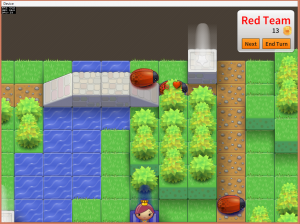
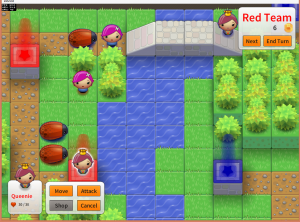
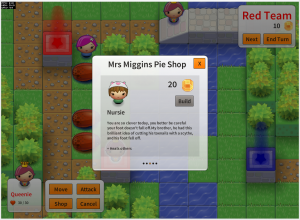
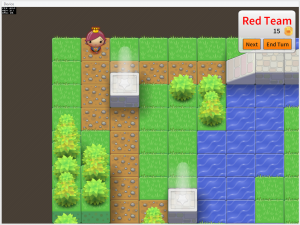
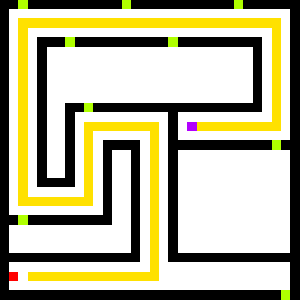
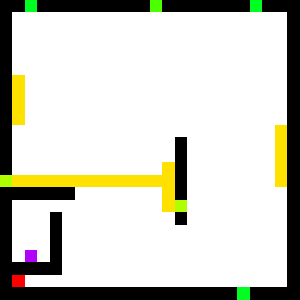
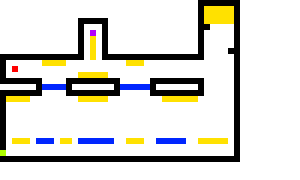
For this one I decided on a type of game that I have been wanting to make for a while, a turn based strategy game. Many moons ago I used to play a J2ME (shudder) game called Ancient Empires. It was a great little game with lots of depth and replayabliltiy and I think it deserved a remake of sorts.
This game was far more complex to create than Latesha's Crib and hence I spent about 43 hours over the last 9 days making this one.
I was able to save some time by reusing parts of the rendering and hopping logic from Latesha's Crib. As usual I used the Ash Framework with Adobe Starling and Feathers. To code the AI for the computer player I used Tim Conkling's Excellent Godmode Behaviour Trees library which is truly an excellent AS3 library. The way Behaviour Trees work is really cool, I strongly recommend checking them out if you are going to design any sort of AI.
Special thanks go to Mike Rigby for helping with play testing and Ian Callaghan for suggesting I check out Behaviour Trees :)
Let me know what you think of it, if people are feeling it then I may turn it into a full-blown mobile game!
Again I recorded the my time spent making this one, heres the log:
4th April 9:30am - 2pm 3pm - 7pm
5th April 9:30am - 10:30am
6th April 12:00pm - 4pm (-1 for josh, -1 for lunch & spanish)
7th April 2pm - 19:30pm
8th April 1pm - 3:30pm (-1 spanish and lunch) 4pm - 6pm
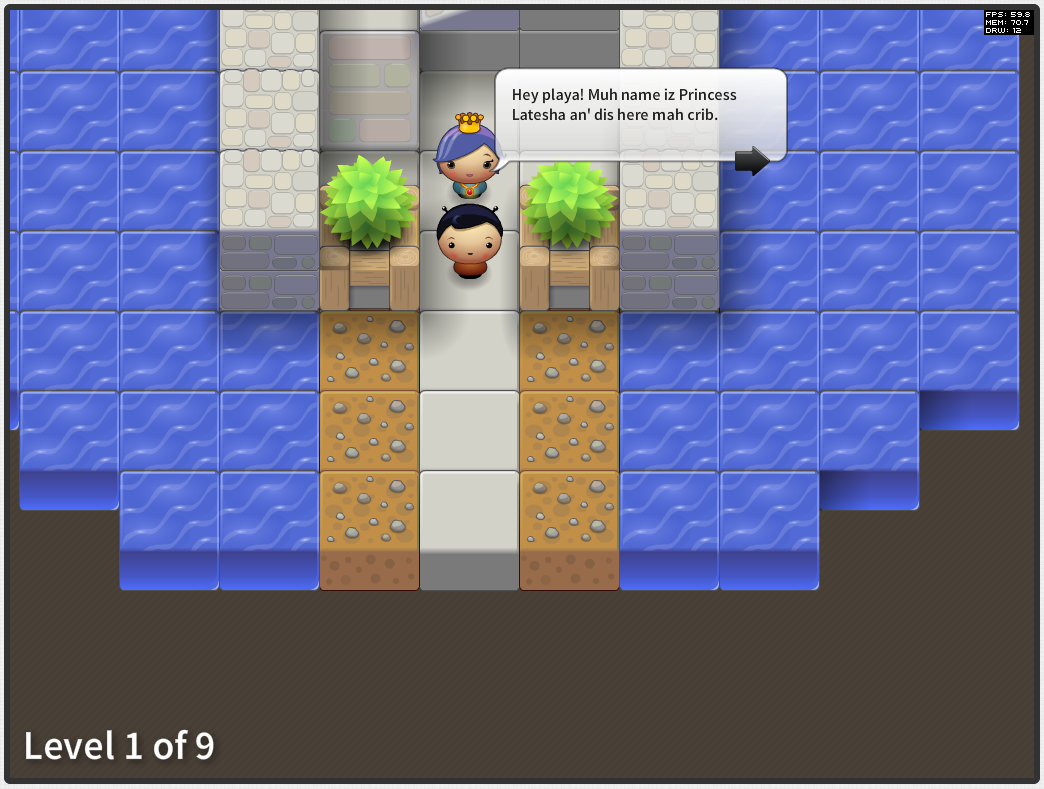
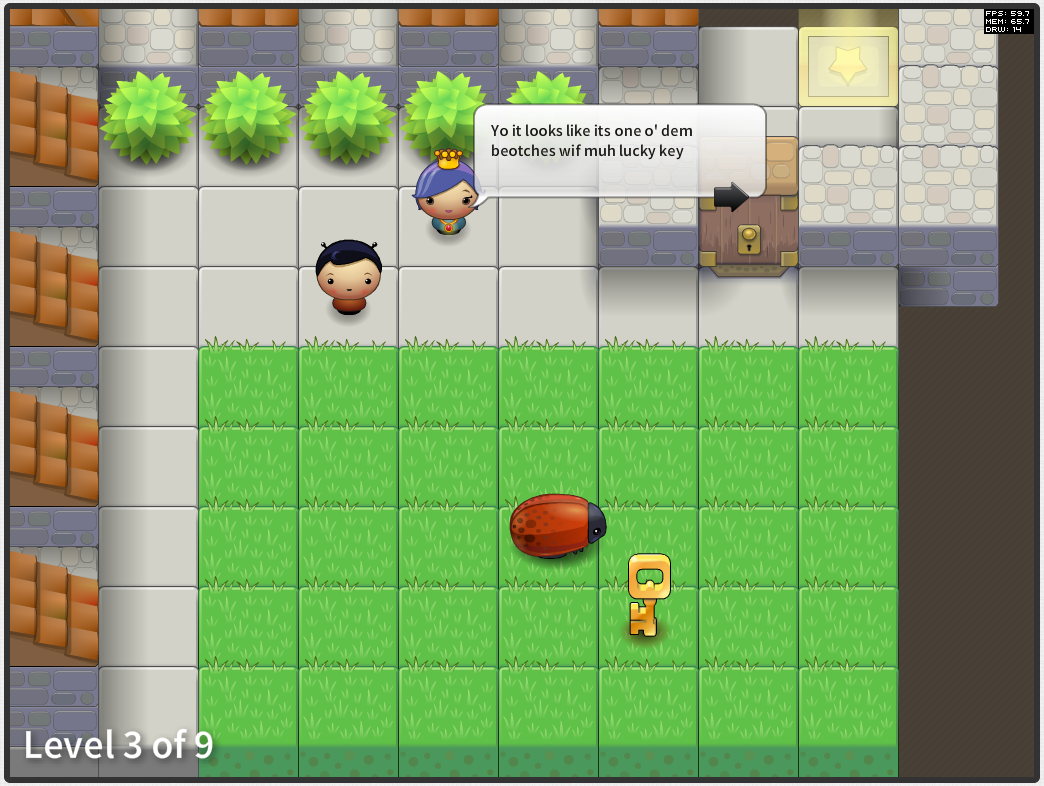
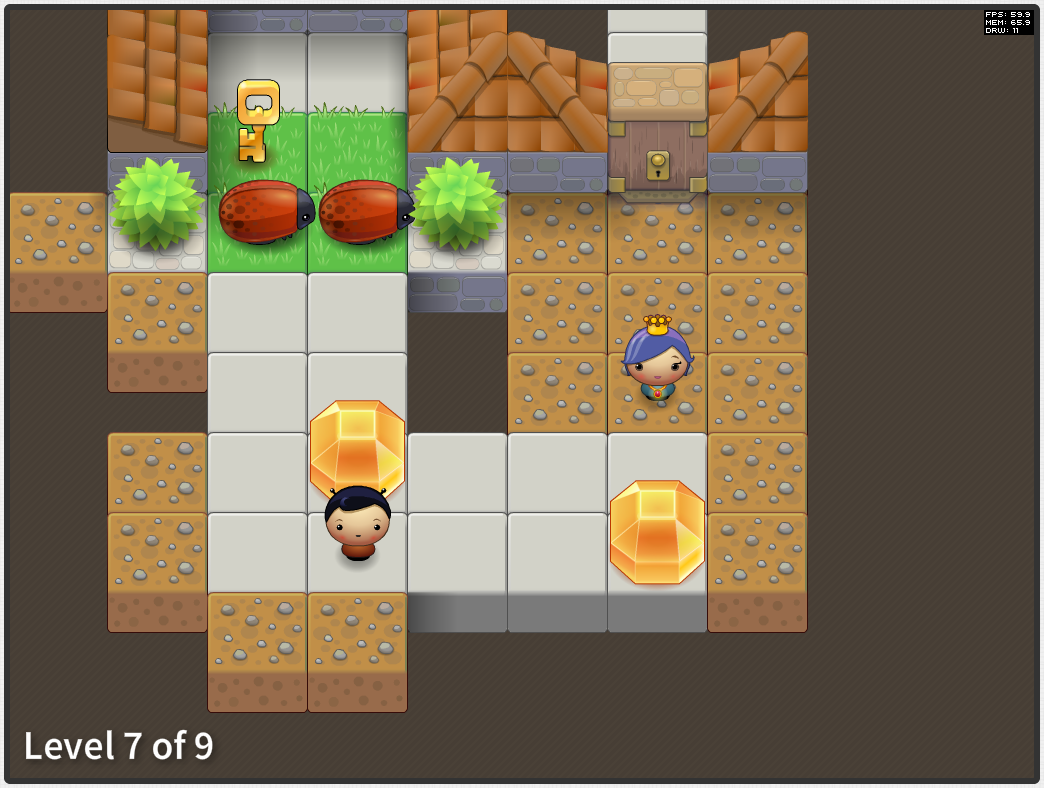
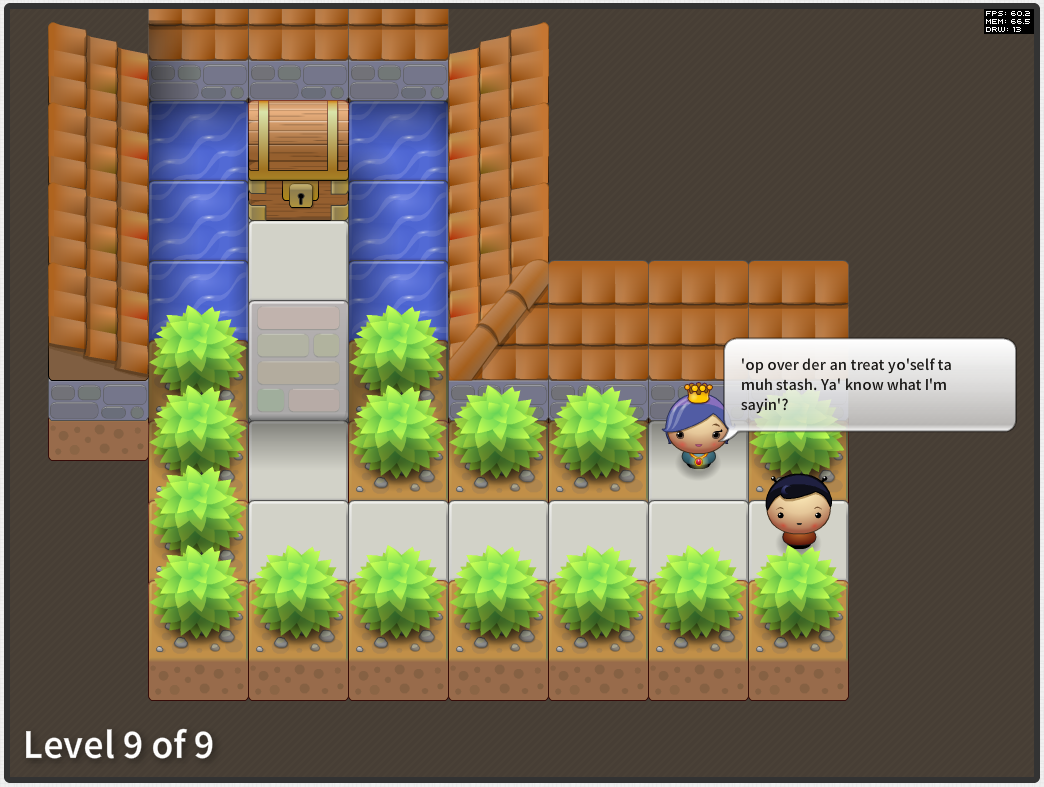
For this one I started off with an idea that I wanted to make a time-based puzzle game. Well it didn't turn out that way, also somewhere along the way I discovered an Ebonics Translator so I decided I would incorporate that for a giggle.
Well as announced in my last post im going to be spending most of this year travelling around various parts of the world. I'm leaving on the 7th on May so I have about a month left before I go so I have been thinking on what small project I can do in the meantime to keep me out of mischief.
I had a great idea for a game which I may write about in a later post but decided that perhaps now may not be the time to make it. So instead what I have decided to do is create a number of prototype games, three to be precise then let you guys decide which one I should take further.
The rules are the games all have to be designed as if they are going to work on mobile so that means only touch based controls. Ill be using Adobe AIR with Ash for all these prototypes so ill make sure that they all run in the browser with PC based controls too.
Im also going to get myself another ground rule. I can only use the free Lost Garden Planet Cute assets.
I hope that this limitation will mean I don't spend too much time worrying about the tech and how it looks and instead concentrate on what has traditionally been tough for me, making it fun!
Ill be updating regularly on my progress and then throw a vote out at the end of it and see which one people like the most, wish me luck!
Another week, another progress update. As usual you can check out the progress above (use the arrow keys to move and jump).
This week has mostly been about all the remaining "bits'n'bobs" that go into a game. That includes level progression, scoring, level and stage unlocking, persistence, settings, audio, pause and resuming, player death, fonts and a whole host of other small things.
Moh my artist partner on this project arrived back from his week holiday this week and since back he has made incredible progress getting all the menu screens and the majority of the graphics for the first stage of levels in. I really love the bright cartoony style he has gone for on the menus, the style really works on mobile too. Looks really professional for less than a weeks worth of work (only evenings dont forget).
I have also spent some time sourcing and putting in the rudiments of music and sound effects. The music theme for the game has been supplied by another colleague from Playdemic, Jake Rigby. Before Jake got into game programming he used to make music and audio effects for games (infact he provided some of the audio for my previous flash games) and he was very kind to provide me one of his tracks he made a while back for the project. The sound effects in the game are temporary at the moment, I hope to improve them this week :)
I have also been working hard on trying to get as many levels in as I can. As mentioned previously the idea is to have 30 levels split over three 'stages' each stage will have its own theme and general style of levels. So far I have made the first 10 levels in:
As mentioned in my last update I noticed that people were having trouble understanding how to play the game with the world rotating. To combat that I decided that the first few levels the world were going to be static, doing so should reduce some complexities with the control system. Well I have extended that "few levels" to now mean that the entirety of the first stage doesn't auto-rotate.
What I have done instead is to re purpose some tile types I had originally planned. You are introduced to the first of these new tile types on level 3 of the game. I think it brings that added sense of dimension to the game, making it more than "just a platformer". Play it above and see what I mean, or check out the video I have made of it working on the devices:
Incredibly the game actually runs at a very acceptable 30FPS on my iPhone 3G! Eat your heart out Adobe AIR!
Good level design really is a talent that I admire as I im absolutely terrible at it. It takes alot of time, patience and testing none of which I have in abundance. It is however critical to making this game fun to play so unfortunately I will be concentrating on level design the most of this week. I would love to hear about any feedback you have on the levels, whether they are too hard, too easy, whether the progression is right. It would be a massive help to me and is only something I can get a rough idea by testing myself, it needs others to play test it :)
With that in mind, onto time-scales. In my first post on this project I declared that I was going to finish this game within three weeks. I then extended it by a week due to my artist being out of action for a week. I am now going to extend it by one final week. I am starting to feel really proud of this little game and I think it would be a shame not to put one final weeks worth of polish in before calling it complete. So although I can no longer call it a "three week game" I can be proud to call it "my first mobile game" ;)
As usual you can have a play with the game in its current form above. (Up to jump, left and right to control the player).
The first new thing to notice are there are now menus, yey! Incredibly poor, made by a toddler, looking menus, but menus nonetheless. My artist and collaborator on this project, Moh, has been away for the last week so the game has had to suffer at the hands of my terrible programmer art. Now that he is back however, he will be whipping the visuals into shape.
Again this week I have had far less time to work on the project that I was hoping for (damn real life). With the little time I have afforded myself, I mostly concentrated on menus, resolutions, DPIs and aspect rations. These topics are the rather unglamorous side of mobile programming but are a necessary part of writing a game for multiple devices.
First a note on my testing environment and devices:
(I currently don't have access to an android device but I hope to test on it soon.)
As you can see there is a rather large variation in resolutions and Dots Per square Inch (DPI). There is also two different aspect ratio's there 4:3 for the iPad and 3:2 for iPhone. The iPhone 3GS is the same aspect ratio but half the resolution as the iPhone 4 and the iPhone 4S is the same aspect and DPI as the iPhone 4. The iPad 2 is half the resolution of the iPad 3 but has the same aspect ratio.
Basically all this equates into a few days of headaches while I try to wrap my brain around how to handle this mess. My solution to this conundrum is set my default target to the iPhone aspect ratio of 3:2 as it is more restrictive in the Y direction than the 4:3 ratio of the iPads. If I can build menus that work in 3:2 then they should look okay (if a little bit more spaced out) in 4:3.
To handle the various resolutions within an aspect ratio I then need to provide various versions of the assets that would roughly take up the same amount of screen space at that resolution. So for example if the screen is 1000px wide for example and the title for a menu is 800px wide when I design it on my PC, I would then need to provide a 1600px wide title image when running on a screen 2000px wide.
So the question is now how to provide these various sizes of my title? Well I could make a PNG for my title 800px wide then when I need one 1600px wide I just scale it up by two. The problem with this as anyone who has played around in Photoshop will know is that you will end up with a blurry up-scaled image. The other solution is to start at the other end with the highest quality 1600px then scale it down when you need one 800px wide, the problem with this is that you are wasting a whole load of memory by supplying and loading an image twice the size of whats required. The third method is to provide a different size for every single resolution required, this is not ideal as it would take alot of time to make all these PNGs and there are a great many device resolutions out there.
Haxe and NME however give me an alternative solution. Using the SWF library I am able to design my menus in Flash then at runtime pull out the vector graphic and scale it to the required size to display on screen. What this means is that I only need supply a single resolution of an asset in flash then it is scaled up as a vector and looks great no matter the resolution.
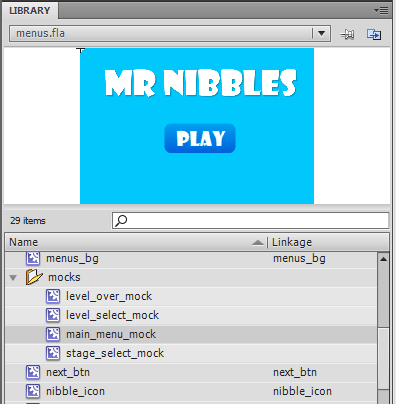
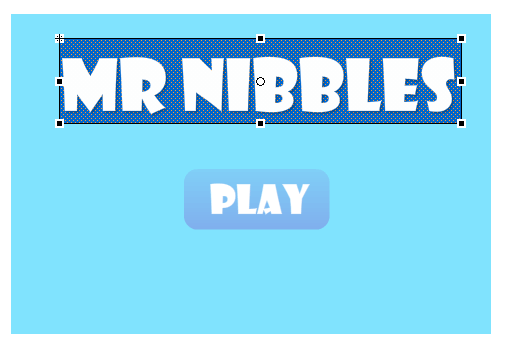
So to work out the correct size for the various parts of the menus initially I created a few "mock screens" in flash and laid out the various parts in the mocks:
By designing the mocks to 960x640 (3:2) I need only then at runtime divide the screen width by 960 to work out the correct scale for the game. Simples!
Well not quite as simples at that. There were a coupple of issues. Firstly the vector rendering performance of NME on mobile is pretty poor. To get around this problem you must pre-raster your vector to a Bitmap first. This should be fairly normal to anyone having worked with Blitting engines in AS3 before. This step however raised another issue.
I noticed it was taking a long time to raster the background for my menus to a bitmap. I did a few experiments and posted the question on the NME mailing list. It turns out that NME currently doesnt handle Radial gradients too well, also performance is generally poor when building in debug mode on iOS. With both this issues rectified however the performance was alot better. There is still a small lag between different menus when on iOS but its acceptable for now.
There also appears to be another issue regarding TextFields on iOS. It appears as if the text is being cut off half way. I have also posted about this issue on the mailing list and am awaiting a reply. My solution for now is to provide a background behind my text set to alpha 0, this forces the width and hight to be correct:
Well with that boring stuff out of the way onto the changes in the game itself.
As mentioned previously the gameplay changes have been fairly minimal. I have made some small changes to how the player is controlled to make it more fun. You can no longer scale vertical cliffs and jumping has been modified. The largest gameplay change has been to how the player is eased into the game.
After watching people play the game on the iPhone and iPad I noticed that alot of the time people didnt seem to understand how to control the player. They assumed the game worked like one of those "move a ball around a maze" type games. So understandably they kept turning the device on its side in an attempt to make the player "go up". With the world constantly rotating too, the person was trying to keep the world level, so they kept twisting the device in odd directions to keep it level. This problem is difficult to explain if you haven't tried it out on a device for yourself.
Once you understand whats going on however (the world is rotating, you tap to jump and tilt to move the player) it all becomes alot more clear and you can play the game normally. So with that in mind I have decided that the first few levels the world will not rotate. I hope this will ease a player into the control system a little better rather than just throwing them at a strange control system in a continually rotating world. Fingers crossed this will do the trick.
So that's that for this week. This week we hope to get as much of the art work in as possible. Hopefully menu systems, and the various bits of artwork for the stages will all go in this week. In addition I want to get audio and testing on Android in. Alot to cover in very little time!
.. and we have progress! See above. Use the keyboard to control the 'player'.
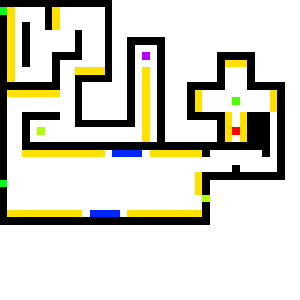
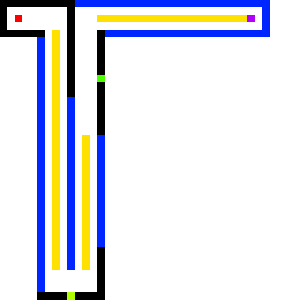
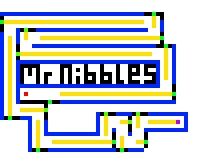
The first thing you will noticed is that there is a world populated with solid blocks and some orange circle things that may look a little like collectables :P To generate this level I decided to take a page out of Notch's book and build the levels at the pixel level in Paint.NET. That way the image editing software becomes the level editor. So as an example, the data that builds the level for above looks like:
That's a 50x50 pixel image which represents a world 50x50 tiles wide. Each pixel in the image has a colour which corresponds to a tile type in the game. Black is a solid wall, red is the player spawn point and orange is a 'collectable'. As the game develops we will be adding more tile types and hence colours.
At runtime all I do is load the level data image and loop through the pixels, grab the colour value and populate the world with the appropriate object. A problem I soon encountered however is that for some reason on different platforms Haxe reads the colour value different. This made things problematic so instead what I have done is make another 8x8 image as a "key":
Loading this key first I can then determine what colour the platform will be recognising a particular tile type as. So to generate the level the code looks like:
[codesyntax lang="actionscript3"]
class LevelManager
{
	public static var TYPES : Hash<Class<Dynamic>>;

	public var gridW : Int;
	public var gridH : Int;
	public var tiles : Array<BaseObject>;

	public function new()
	{
		if (TYPES == null)
		{
			var objectTypes = [null, SolidBlock, SpawnPoint, Ring];
			TYPES = new Hash<Class<Dynamic>>();
			var bmd =  Assets.getBitmapData("assets/levels/key.png");
			if (bmd == null) throw new Error("key png is null for some reason!");
			var i = 0;
			for (y in 0...bmd.height) for (x in 0...bmd.width) if(i<objectTypes.length) TYPES.set("" + StringTools.hex(bmd.getPixel(x, y), 6), objectTypes[i++]);
		}
	}

	public function loadLevel(stageIndex:Int, levelIndex:Int)
	{
		var bmd =  Assets.getBitmapData("assets/levels/s" + stageIndex + "_l" + levelIndex+"/world.png");
		gridW = bmd.width;
		gridH = bmd.height;
		tiles = [];

		for (y in 0...gridH)
		{
			for (x in 0...gridW)
			{
				var c = StringTools.hex(bmd.getPixel(x, y), 6);
				var t = TYPES.get(c + "");
				if (t == null) { continue; }
				var o : BaseObject = Type.createInstance(t, []);
				o.x = x * Game.GRID_SIZE;
				o.y = y * Game.GRID_SIZE;
				Game.I.addObject(o);
				tiles[y * gridW + x] = o;
			}
		}
	}
...
[/codesyntax]
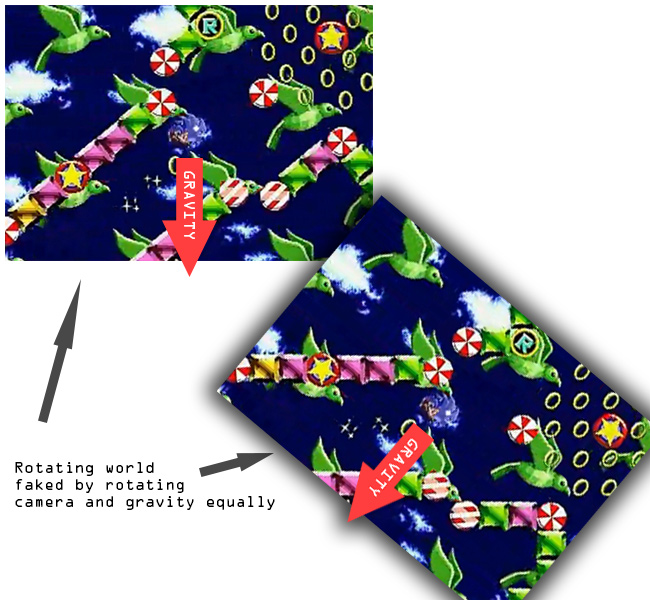
Once I had the level populating I started getting the basics of the physics sorted. At first I thought it was going to be a nightmare as in the original version of the game it appeared as if the whole world rotated about the player (see video for reminder), I worried about how I was going to handle the complex physics of a grid at odd angles while continually rotating. After a while however I realised that what was actually going on was that the world was standing still and all that was happening was that the camera was rotating at same rate at which the gravity vectyor was changing, thus giving the illusion of a rotating world, eg:
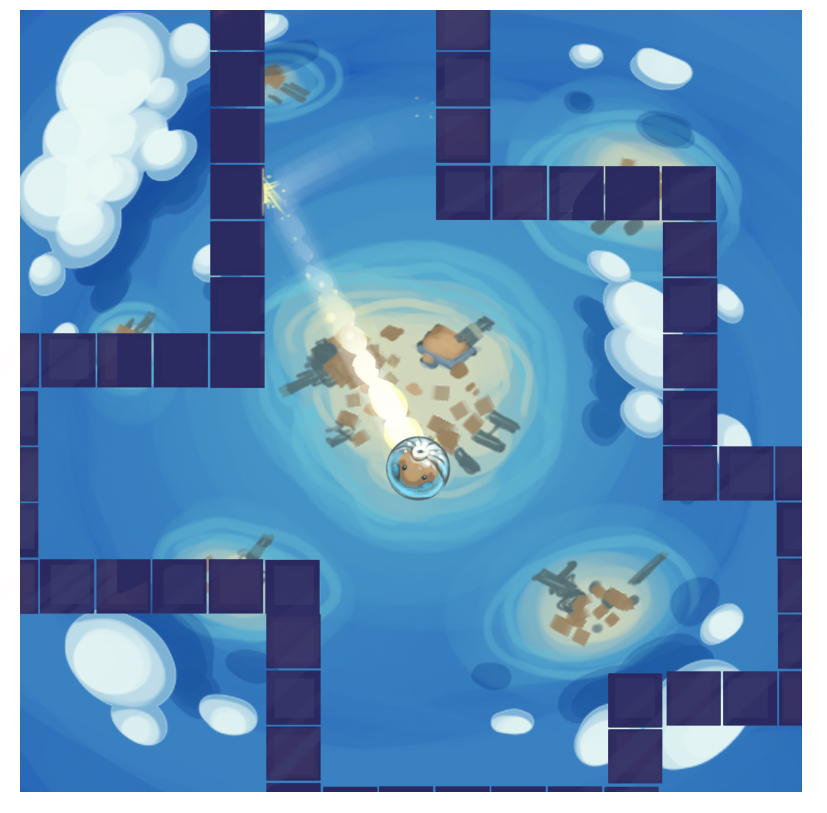
Once I realised this fact it made my life a whole lot easier. Calculating the physics for the world should now just be a matter of solving a circle against a static grid without rotations. I decided to go with my own physics solution rather one of the existing solutions such as Box2D or Nape as I thought that it should be pretty simple to calculate and I knew from a previous project that using Box2D or Nape would have issues at the joins between tiles.
The solution it turns out took a little longer than I thought but I eventually cracked it. The key was to use the Separating Axis Theorem with Voroni Regions, there is a great tutorial on it over at magnet software, they have a handy SWF that demonstrates the concept really well:
As can be seen from above that all you need do is split the problem up into a grid, then in turn check each of the 8 neighbouring cells from the current cell. The north, east, south and west cells can be classed as one type and only need to have their relevant axis checked against the radius of the player wheres the corner cells need to be checked against the distance from the closest point. In code this looks something like:
[codesyntax lang="actionscript3"]
// From Player.hx
override public function update(delta:Int) : Void { #if !mobile if (Ctrl.instance.isDown("up")) vel.y -= 1; if (Ctrl.instance.isDown("left")) vel.x -= 1; if (Ctrl.instance.isDown("right")) vel.x += 1; //if (Ctrl.instance.isDown("down")) vel.y += 1; #end
if (Ctrl.instance.mouseDown) vel.y -= 1;
var d = delta * 0.01; vel.x += gravity.x * d; vel.y += gravity.y * d;
var newPos = new Vec2(x + vel.x * d, y + vel.y * d); var ntx : Int = Std.int(newPos.x / Game.GRID_SIZE); var nty : Int = Std.int(newPos.y / Game.GRID_SIZE);
private function checkTileCollide(fromTX:Int, fromTY:Int, toTX:Int, toTY:Int, pos:Vec2, vel:Vec2) : Bool { var tile = game.level.getTile(toTX, toTY); var dTX = fromTX - toTX; var dTY = fromTY - toTY; if (tile != null && tile.is(SolidBlock)) { if (dTX == 0) { var d = Math.abs(pos.y-((toTY - fromTY) > 0?toTY * Game.GRID_SIZE:fromTY * Game.GRID_SIZE)); if (d < radius) { pos.y += dTY * (radius - d); vel.y = 0; return true; } } if (dTY == 0) { var d = Math.abs(pos.x-((toTX - fromTX) > 0?toTX * Game.GRID_SIZE:fromTX * Game.GRID_SIZE)); if (d < radius) { pos.x += dTX * (radius - d); vel.x = 0; return true; } } else { var tp = new Vec2((dTX>0?fromTX:toTX)*Game.GRID_SIZE, (dTY>0?fromTY:toTY)*Game.GRID_SIZE); var vToCorner = new Vec2(tp.x - pos.x, tp.y - pos.y); if (vToCorner.lengthSqr() < radius * radius) { var ang = Math.atan2(vToCorner.y, vToCorner.x); pos.x = tp.x - Math.cos(ang) * radius; pos.y = tp.y - Math.sin(ang) * radius; //vel.x = vel.y = 0; return true; } } } return false; }
[/codesyntax]
Its not 100% perfect, there is some oddness when the player hits a corner but will do for now.
On the art side of the project Moh has been making good progress coming up with themes for the game. We have been playing around with the idea that the player is a Hamster lost in space, which I really like the idea of. To test this idea he made little mock-up, which looks great:
You may have noticed that currently the game is in Flash. That's because with NME you can target Flash as one of your outputs. This makes developing and testing the game alot easyier (a lot faster to compile and run). I have however been very aware of the problems I could cause myself if I developed the whole game solely in flash and only testing on mobile right at the end. Trying to track down an obscure problem in a fully written game would be a nightmare. So I have been making progress with getting the game to run on my iPhone 4.
One of the problems I faced (and I banged my against the wall for a while on this one) was that for some reason when the level was populating from the PNG, certain tiles weren't being built. I couldn't for the life of me work out why. To cut a long story short, apparently when building for iOS in Haxe you MUST put the super call in the constructor BEFORE any other call, else the code before the super call in the constructor wont be executed:
[codesyntax lang="actionscript3"]
class Player extends BaseObject
{

	public function new()
	{
		trace("This will not be executed when built for iOS but WILL be executed when built for flash");
		super();
		trace("This will be execute on flash AND iOS");
	}

...
[/codesyntax]
A small thing to remember but quite a gotcha for the NME Haxe newbie!
Another issue I have run into is the fact that my iPhone currently has iOS 5.1 on it, this means that to use it as a testing platform I had to upgrade my Macbook to OSX Lion which meant I have to leave it running over night and this morning downloading and installing. Not a biggie as I have been meaning to upgrade for a while anyways, but an inconvenience when you want to sit down to test your shiny new game out!
We have quite a way to go, but im happy with the progress we have made in 3 days thus far :)